
Over the years, I have visited most of the famous Thracian tombs in Bulgaria that are open to the public, yet I had never seen one as beautiful as the royal Thracian tomb of Sveshtari. It is a pity I cannot show photos of the interior, as photography is strictly prohibited there. So, this time I will describe my impressions in words alone – but rest assured: this is a site of global significance that is an absolute must-see! It possesses such beauty, architectural detail, exquisite craftsmanship, and an air of mystery!
Where the Sveshtari Tomb Is Located
The Thracian tomb of Sveshtari is situated approximately 2 kilometers from the village of Sveshtari (hence the nowadays name), near the town of Isperih, Razgrad province. It is accessible by car via a paved road. I will not dwell on the specific travel guidelines, as there are plenty of signposts along the way. I will simply add that it is part of the Sboryanovo Historical and Archaeological Reserve – a unique complex encompassing several other ancient burial mounds and necropolises, the remains of an ancient Thracian city, the Demir Baba Teke Muslim shrine, and stunning natural landscapes that harbor rare plant and animal species.
The complex is well-organized and boasts good infrastructure, featuring roads leading to key sites, designated parking areas, and pathways around the burial mounds.
Working hours of the Thracian tomb of Sveshtari
Wednesday to Sunday
09:00–12:30 / 13:00–16:30 (last visitor entry at 16:00)
The site welcomes tourists seasonally from mid-March to the end of November.
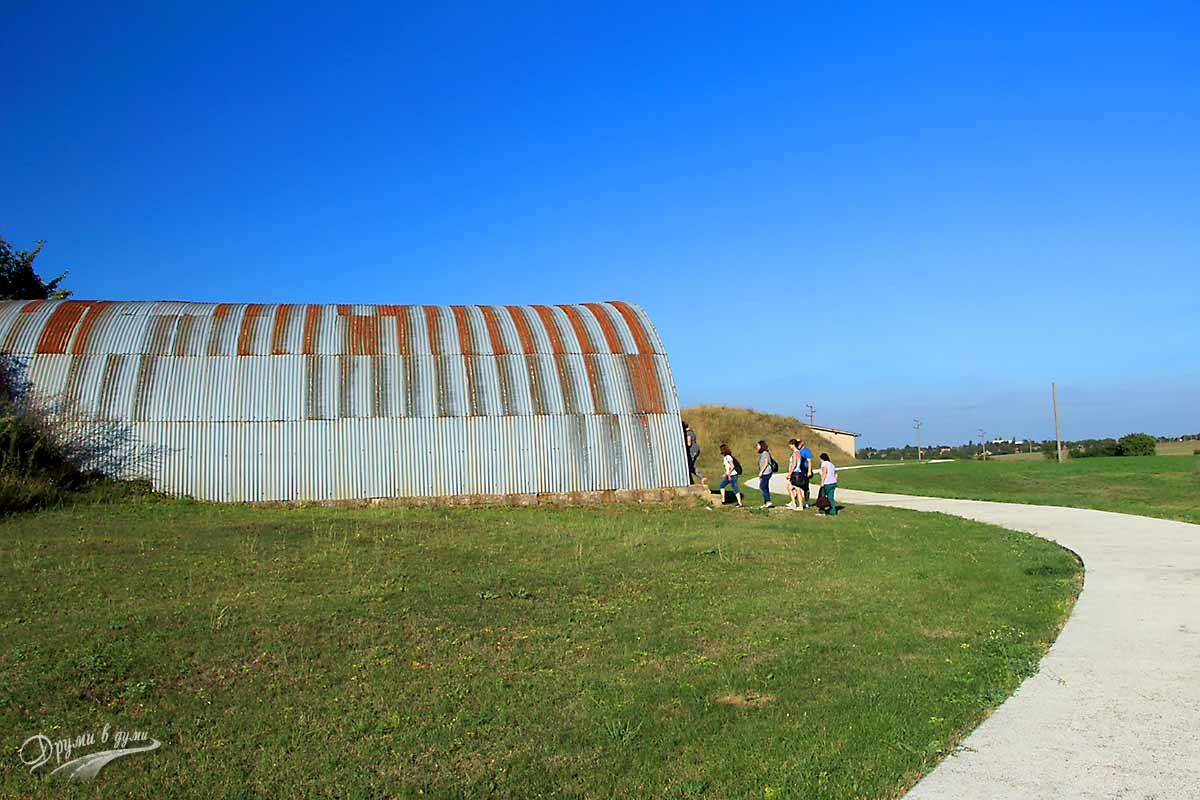
Bear in mind that due to the specific climatic conditions required to preserve the Sveshtari Tomb, visits are subject to controlled access, with limits on the number of tourists and the duration of their stay inside the protective structure.
Entry to the tomb is organized in guided groups. Groups are formed on-site at the complex’s Visitor Center. Waiting times may occur depending on the volume of visitors. Advance reservations are accepted for groups of more than 10 people.
Tickets: ~ 8 eur for Sveshtari tomb and ~19 eur for the whole complex “Sboryanovo”.
For further information and reservations: tel. +359 84735 279.
Brief Information about the Thracian tomb of Sveshtari
The Sveshtari tomb was designated a UNESCO World Heritage Site in 1985, a status that has helped fund comprehensive preservation measures. Visits to the tomb include a guided talk. Additionally, two other burial mounds can be visited.
The Sveshtari Tomb is a Thracian cult complex. Classified as a Thracian-Hellenistic tomb, it dates back to the first half of the 3rd century BC. It is believed to be a royal tomb and the final resting place of the Getae ruler Dromichaetes – the man who defeated a great general of Alexander the Great and ruled over Tirizis (modern-day Kaliakra).
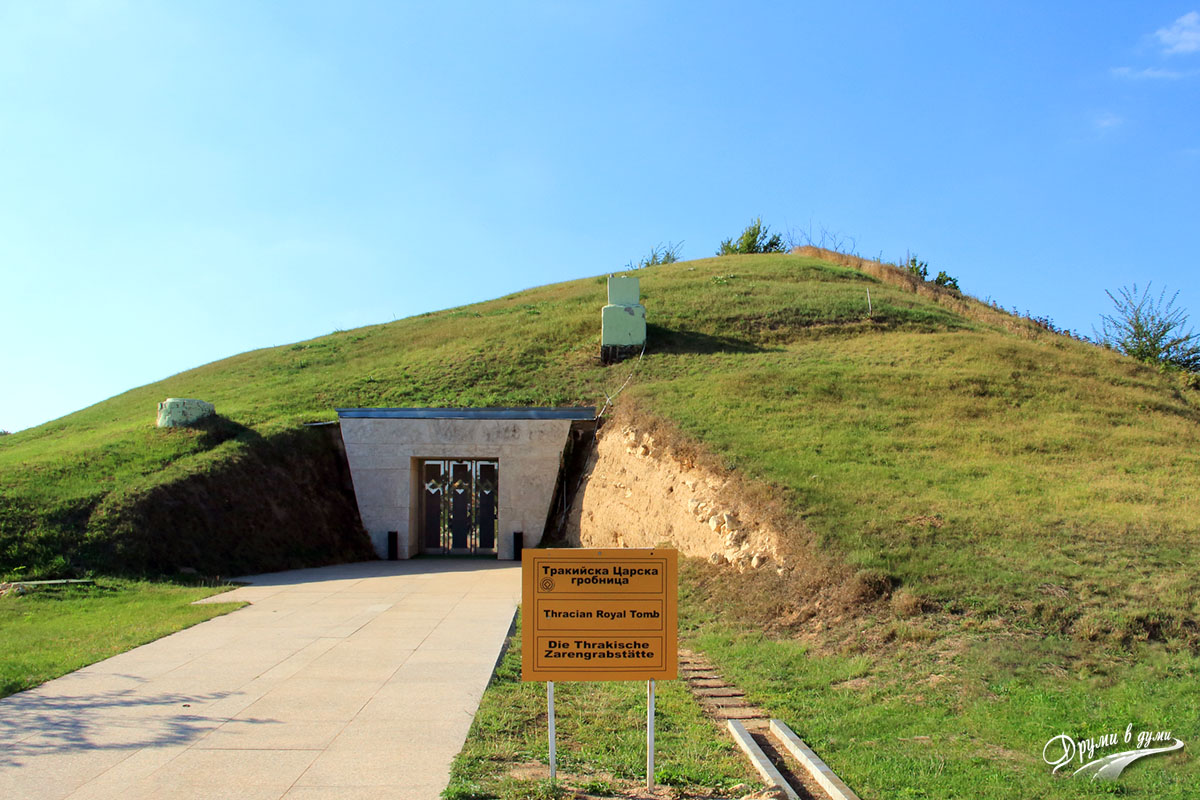
The Thracian tomb of Sveshtari has been fully excavated and studied. Following the research, a protective structure was built around the tomb, and the structure itself was covered with earth. Consequently, from the outside, the site resembles other Thracian tombs – appearing as a burial mound covered in vegetation. However, inside the enclosure, the entire tomb and its exterior walls are visible, and visitors can walk around the structure.
You can view photos of the interior of the Sveshtari Tomb on the Bulgarian Ministry of Tourism’s website here.
Personal Impressions from the Sveshtari tomb
Before my visit to the Thracian tomb of Sveshtari, I had never seen the exterior walls of a Thracian tomb. As far as I know, the Sveshtari Tomb is the only one that offers this opportunity.
I was deeply impressed by the tomb’s white limestone walls. The structure consists of a corridor and three rooms: an antechamber and two inner chambers. In the large chamber, alongside the ruler’s burial space, there is a unique arrangement of twelve female statues – figures that resemble one another yet are distinct in their own right. It is believed that these represent the Mother Goddess. Some of the tomb’s ornamentation remains unfinished, leading to the theory that the ruler – for whom this was the final resting place – died prematurely, likely having been killed in battle.
The tour guide informed us that the remains of three individuals were discovered within the tomb. One was a man of about thirty-six, the ruler himself. Another was a woman of around twenty-five, presumably the ruler’s wife. The remains of the third individual – aged approximately fifty – were incomplete, and analysis revealed they had been placed there at a later date; it is speculated that this person was a relative of the ruler.
What’s more: Demir Baba Teke
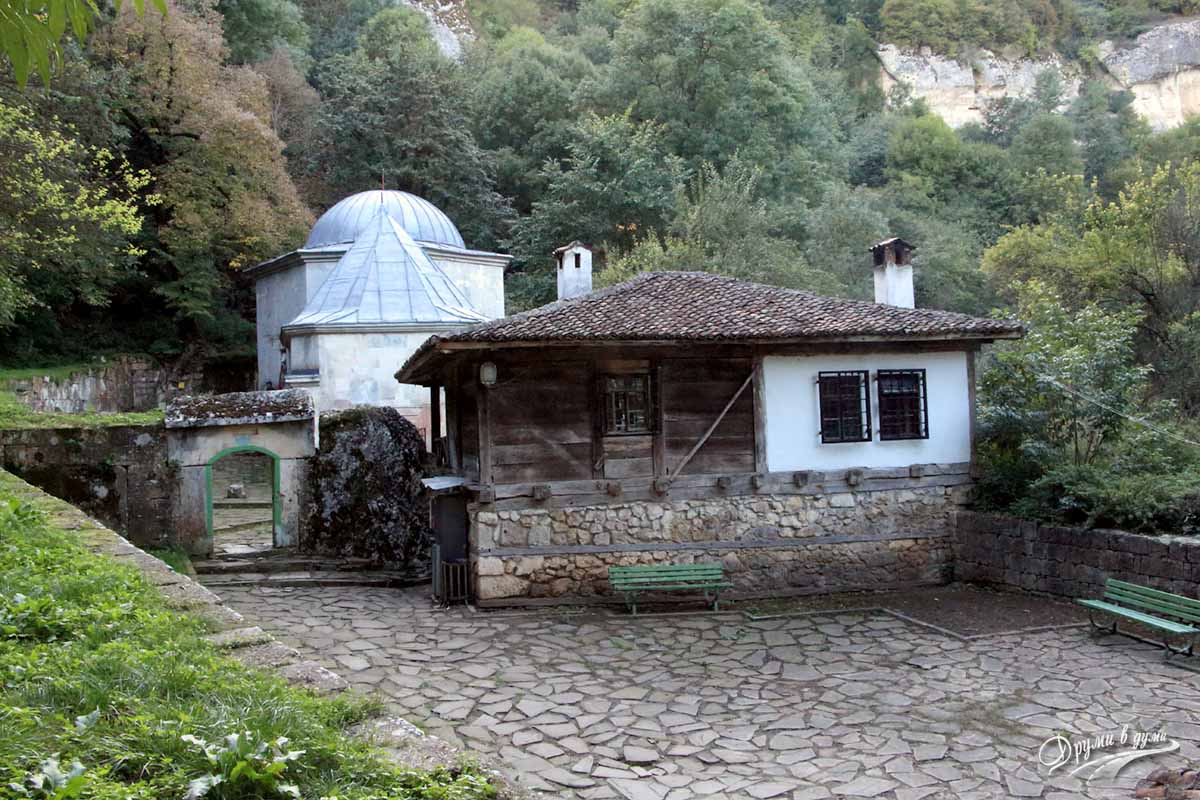
Another interesting site within the Sboryanovo Historical and Archaeological Reserve is Demir Baba Teke – the tomb of the Muslim leader Demir Baba. The location is stunning; the structures are situated at the foot of a rocky ridge.
In addition, while in the Razgrad region, be sure to visit the ruins of the Roman city of Abritus; it is a truly impressive site.


